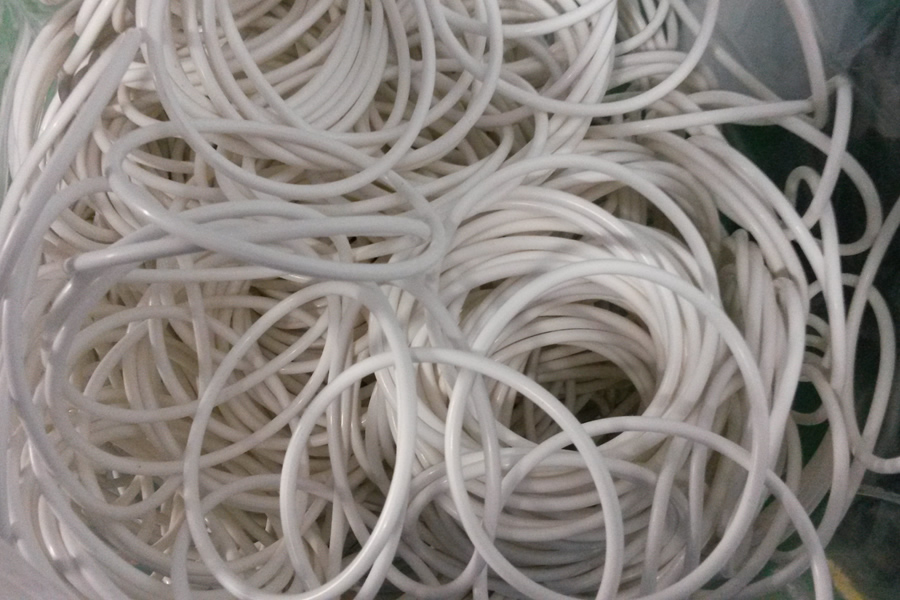
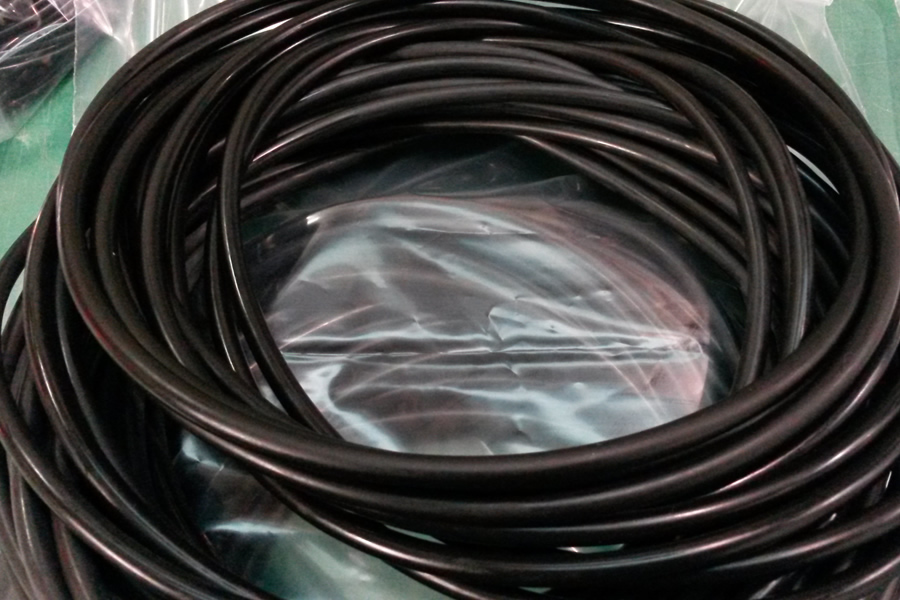
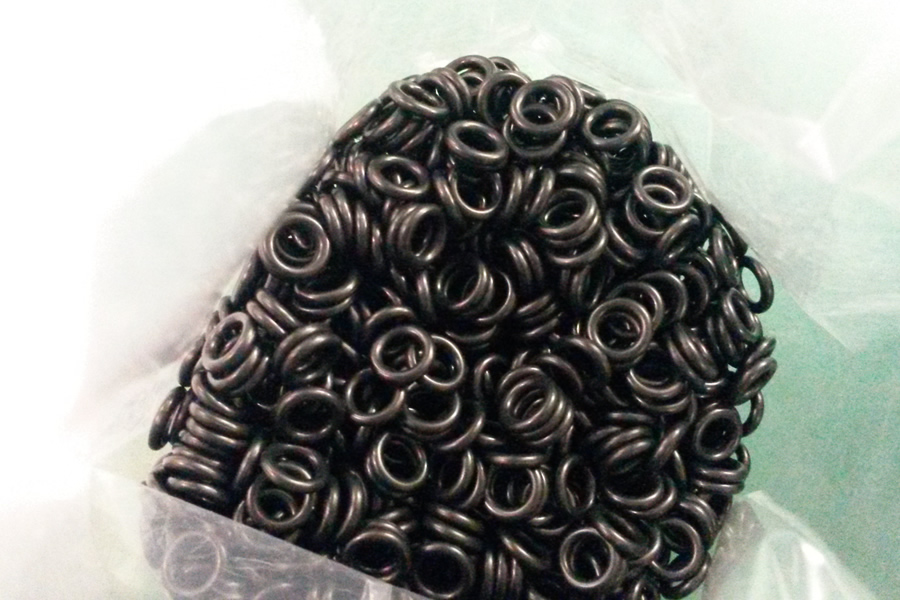
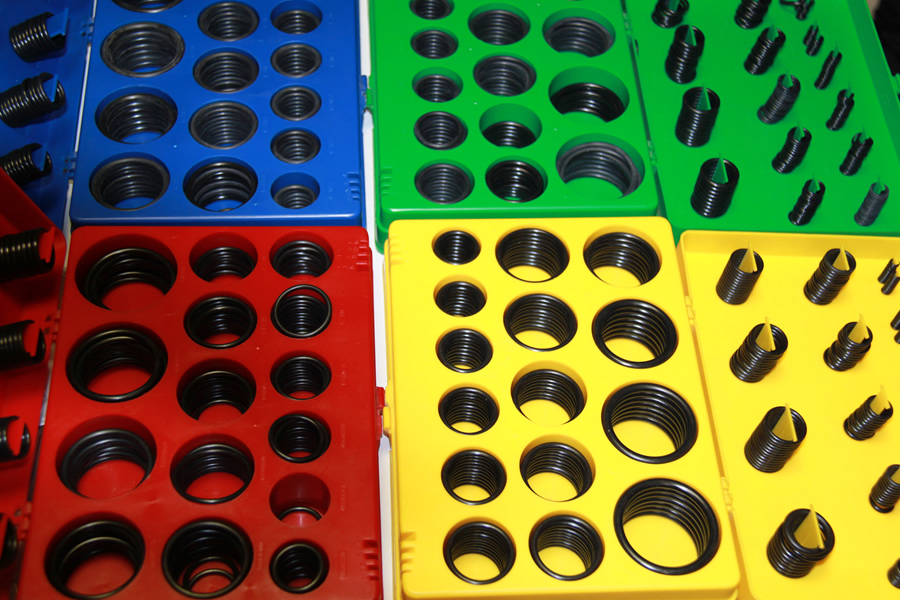
The compounds generally used are the following:
NBR 70 shore A – Nitrile elastomer
The NBR 70 compound used has an average ACRYLONITRILE (ACN) content of 33%. The characteristics of the “NBR” gaskets are good for aliphatic hydrocarbons, animal, vegetable and silicone oils and fats, water, many diluted acids, bases and saline solutions. Heat resistance is good up to + 100 ° C, and for a short time up to 120 ° C. Above these temperatures, aging becomes faster, making the vulcanized hard and brittle. In hot oil the aging process becomes much slower than in hot air. The elasticity and resistance to low temperatures is differently proportional to the n. of ACRYL-NITRILE of the compound; The parts printed with NBR 70 are resistant to -35 ° C. Nitrile rubber is to be considered a semiconductor and its vulcanized are unsuitable for electrical insulation, while the impermeability to gasses is good, which increases with the increase in the ACRYL-NITRILE content. All items in NBR 70 are treated with a post-curing process which allows to obtain very low Compression – Set values and optimal mechanical values.
COMPOUND RESISTANT TO:
mineral oils, greases, aliphatic hydrocarbons, inorganic fluids at a not too high temperature and concentration. Hot water up to 100°C.
EPDM 70 shore A
OR type gaskets based on E.P.D.M. rubber has excellent resistance to ozone and oxygen and are insensitive, both in static and dynamic conditions, to the action of these oxidizing agents without adding any antioxidant and antiozonant to achieve this behavior. Excellent resistance to degradation due to atmospheric aging, good resistance to high temperatures (+ 150°C) in both dry and humid environments. Good resistance to low temperatures while maintaining flexibility down to -55°C. Excellent dielectric properties and high resistance to deformation. Good mechanical and elastic characteristics with resistance to chemicals (organic and inorganic acids, alkalis, phosphoric esters, hydraulic liquids, anti-freeze liquids, and brines, bleaching agents, biodegradable and non-biodegradable detergents, vegetable oils and fats) and excellent impermeability.
NEOPRENE
Compound based on CR (polychloroprene rubber) with excellent application versatility for resistance to oils, atmospheric agents and flame. Excellent mechanical characteristics.
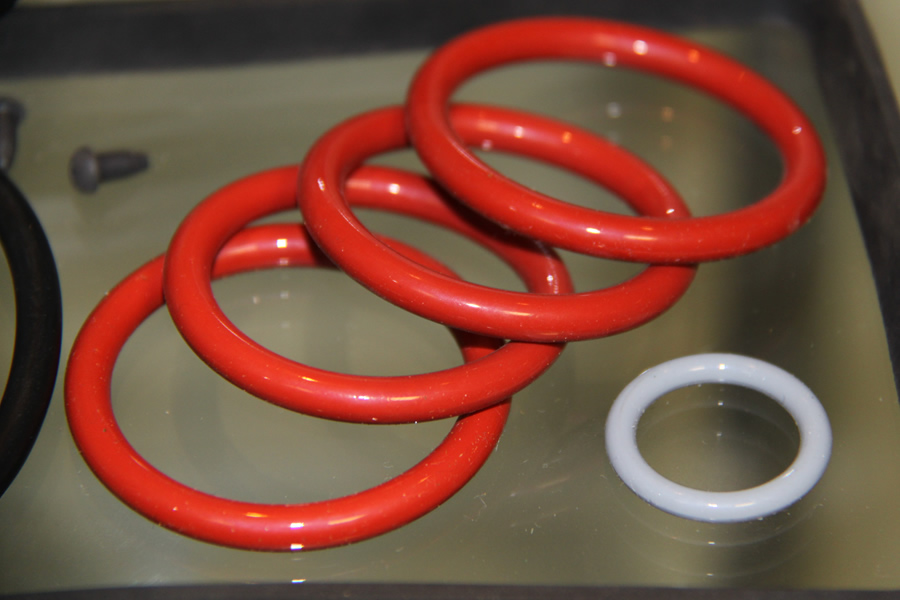
SILICONE
It is a two-component liquid silicone rubber for the production of elastic items through the injection molding process. The molecular structure is characterized by bonds in which the carbon, of the other products, is substituted for the silicon and consequently both the transformation technology and the type of use are largely completely peculiar. The artifacts in L.S.R. they occur as the product of the addition reaction of two different components with a gelatinous consistency. The cross-linking process, comparable to that of vulcanization, can be accelerated or delayed using temperatures, but in any case it begins irreversibly, when the two components come into contact. The L.S.R. therefore it is not recoverable and cannot be printed with the technology used for vulcanizable pastes and compounds.
This material is therefore transformed with specific injection presses that allow it to achieve the best results.
- Excellent resistance to heat + 250°C
- Excellent resistance to low temperatures and flexibility to cold -60°C
- Excellent thermal stability
- Excellent resistance to aging and great stability to ozone and ultraviolet rays
- Excellent dielectric behavior in a wide range of temperatures
- Excellent elastic characteristics in the wide range of available hardnesses
- Excellent elongation at break
- Excellent breaking load
- Physiological indifference
- Absence of odor and taste
- Excellent dimensional stability
- Complies with BGA, FDA, KTW standards for contact with food
Hardnesses available from 20 shore to 80 shore
FKM, FPM (Viton) 75 shore black fluorinated elastomer
Fluorinated elastomers have considerable resistance to ozone, mineral oils, synthetic liquids, fuels, aromatic compounds and many solvents and chemical agents. The parts printed with fluorinated compounds are resistant to water, steam and a series of acids. Heat resistance is excellent up to 200°C, and for a short time at even higher temperatures (up to 230°C). The resistance to low temperatures is limited and in any case sufficient for various applications. In general, articles of fluorinated compound can be dynamically stressed down to -20°C. In static use, the resistance is greater and reaches -40°C.
The APPROPRIATELY FORMULATED compound can be used for the insulation and coating of low voltage cables when a very high thermal and chemical resistance is required.
COMPOUND RESISTANT TO:
Excellent resistance to both diluted and concentrated acids, solvents (aromatic hydrocarbons, aliphatic hydrocarbons), oil and petrol, animal and vegetable oils, oxidation, ozone and flame, aging in sunlight, heat and has good resistance to low temperatures.